
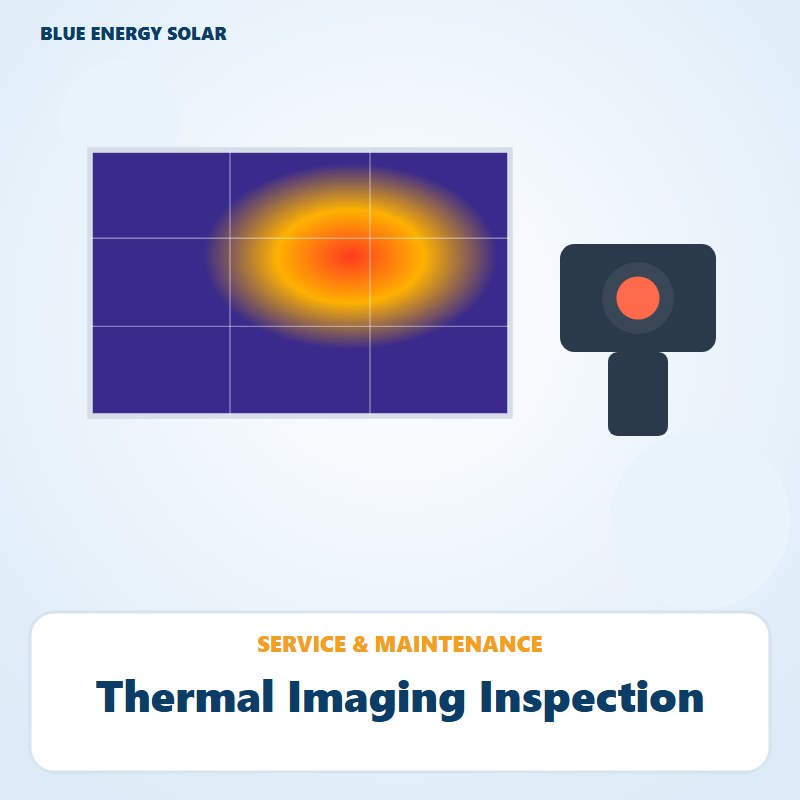
An infrared scan of your commercial solar array, by drone or at roof level, to find hot spots, failing connectors and faulty bypass diodes before they cause losses.
From $990 (Up to 100 kW), including GST. Indicative starting price: the final fixed price is confirmed in writing after a site assessment.
Many solar faults are invisible to the naked eye but show clearly as heat. Cracked cells, failed bypass diodes, degraded solder bonds, loose connectors and partial shading all create temperature differences across the array. On a commercial roof with hundreds of panels, a thermal imaging inspection is one of the fastest ways to find problems before they cause lost production or fire risks.
We scan the array with a calibrated thermal camera, by drone or from roof level depending on site access and airspace, while the system is operating in strong sunlight. Anomalies are photographed, located on a layout plan and classified by severity. Inspections start from $990 for systems up to 100 kW. This is an indicative starting price; the final fixed price is confirmed in writing after we review the site, roof access and flight conditions.
We design, install and maintain commercial solar, so our reports go beyond pictures: we explain what each hot spot means and what should be done about it. When repairs are needed, our licensed electricians and SAA-accredited installers can quote and carry them out. We are a New Energy Tech Approved Seller with $20 million public liability cover, and we work to your site induction and safety rules.
Owners and facility managers of commercial and industrial solar systems who want a fast, non-invasive check of every panel.
Conditions matter. Reliable thermal results need strong, steady sunlight and the system operating normally, so inspections are scheduled for clear days and may be moved if the weather changes.
Drone flights depend on aviation rules, local airspace restrictions and site permissions; where flying isn't possible, we inspect from roof level, which can take longer. Thermal imaging finds heat-related faults but doesn't measure panel degradation precisely, so pairing it with IV curve testing gives a fuller picture. The price depends on system size, roof access, site induction requirements and the number of buildings.
1. Request an inspection and share your system size, layout and any monitoring alerts.
2. We check site access, safety requirements and flight conditions and confirm a fixed written price.
3. We schedule the scan for a clear, sunny day and complete your site induction.
4. The array and accessible electrical components are scanned while operating.
5. You receive a written report with images, fault locations and recommended actions.
The listed price is an indicative starting price for systems up to 100 kW; the final fixed price is confirmed in writing after we review the site and access.
Inspections need clear, sunny conditions and may be rescheduled for weather.
Drone use is subject to aviation rules, airspace restrictions and site owner permission.
Repairs and replacement parts are not included and are quoted separately.
Site inductions, escorts or after-hours access requirements may affect the price.
Where we work
Timing
How your request works
Prices include GST.
